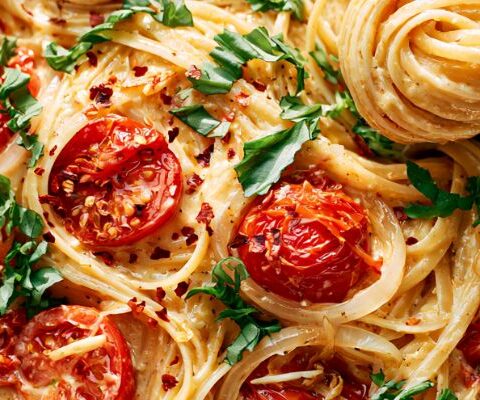
Ina Garten butternut squash risotto from Food Network roasts cubed squash separately and folds it into saffron-laced Arborio rice finished with Parmesan. And the risotto serves 6 at approximately 520 calories per serving in about 1 hour, since the squash roasts while the rice cooks on the stovetop.
Most squash risottos stir raw cubes directly into the rice and let them break down during cooking, but Ina roasts hers at 400°F first. So the squash caramelizes on the sheet pan and holds its shape when folded in at the end, which gives each bite distinct pieces of sweet roasted squash instead of a puréed mush.
Adding the stock 2 ladles at a time and waiting until each addition absorbs before pouring more is the technique that builds the creamy texture risotto is known for. And if you dump all the stock in at once, the rice boils instead of releasing starch gradually, so the finished dish tastes like soup rather than a thick, clinging risotto.
Source: Ina Garten (Food Network)
Ina Garten Butternut Squash Risotto
Course: Dinner, AppetizersCuisine: ItalianDifficulty: Intermediate6
servings20
minutes40
minutes520
kcalCubed butternut squash roasts at 400°F while pancetta and shallots sauté in butter before Arborio rice toasts and white wine cooks off. Then simmering chicken stock adds 2 ladles at a time with saffron over 30 minutes, and roasted squash with Parmesan fold in off the heat.
Ingredients
- For the roasted squash:
1 butternut squash (2 pounds), peeled, seeded, and cut into 3/4-inch cubes
2 tablespoons olive oil
1 teaspoon kosher salt
1/2 teaspoon freshly ground black pepper
- For the risotto:
6 cups chicken stock, preferably homemade
6 tablespoons (3/4 stick) unsalted butter
2 ounces pancetta, diced
1/2 cup minced shallots (2 large)
1 1/2 cups Arborio rice (10 ounces)
1 teaspoon saffron threads
1 teaspoon kosher salt
1/2 teaspoon freshly ground black pepper
1 cup freshly grated Parmesan cheese
Directions
- Preheat the oven: Heat to 400°F.
- Roast the squash: Then toss the cubed squash on a sheet pan with olive oil, salt, and pepper, and roast 25 to 30 minutes until very tender, tossing once.
- Heat the stock: While the squash roasts, warm the chicken stock in a small covered saucepan and keep it at a low simmer.
- Sauté the pancetta and shallots: In a heavy pot or Dutch oven, melt the butter and cook the pancetta and shallots over medium-low heat for 10 minutes until translucent.
- Toast the rice: Once the shallots are soft, add the Arborio rice and stir to coat every grain with butter.
- Toast the rice: Once the shallots are soft, add the Arborio rice and stir to coat every grain with butter.
- Add the wine: Then pour in the white wine and cook for 2 minutes until absorbed.
- Start adding stock: Once the wine is gone, add 2 full ladles of simmering stock along with the saffron, salt, and pepper.
- Stir and simmer: Then stir and let the stock absorb over 5 to 10 minutes before adding more.
- Continue ladling: Each time the mixture looks a little dry, add 2 more ladles and stir every few minutes.
- Cook until al dente: Continue this process for about 30 minutes total until the rice is cooked through but still has a slight bite.
- Fold in the squash and cheese: Once the rice is done, remove from the heat and stir in the roasted squash cubes and Parmesan.
- Serve immediately: Then mix well and serve right away while the risotto is still creamy.
FAQs
Can I skip the saffron?
Saffron adds a floral, earthy depth and a golden color that pairs naturally with the sweet roasted squash. And since only 1 teaspoon of threads goes into 6 cups of stock, the flavor is subtle rather than overpowering.
But if saffron is unavailable or too expensive, a pinch of turmeric gives a similar golden hue without the same flavor. Since turmeric tastes earthier and slightly bitter, use only 1/4 teaspoon to tint the rice without changing the overall taste.
Why does the recipe use pancetta instead of bacon?
Pancetta is Italian cured pork that is not smoked, so it adds a salty, porky richness without the smoky flavor that bacon brings. And since risotto is a delicate dish, the milder pancetta blends into the butter and shallots instead of dominating them.
But if pancetta is unavailable, bacon works as a swap if you blanch the strips in boiling water for 1 minute first to remove some of the smoke. Since the ina garten chicken stock relies on clean, unsmoked flavors too, the same no-smoke principle applies to any dish built on a subtle base.
Do I have to stir the risotto constantly?
The recipe says to stir every few minutes, not constantly, which is less demanding than most risotto instructions suggest. And stirring too vigorously breaks the rice grains and turns the texture gummy instead of creamy.
So add your 2 ladles of stock, give it a few gentle stirs, and let it simmer undisturbed for most of the 5 to 10 minutes before the next addition. Since the starch releases gradually as the rice absorbs liquid, occasional stirring is enough to build the creamy consistency.
Can I make this risotto ahead?
Risotto is best served immediately, because the starch continues to absorb liquid as it sits and the texture tightens within 20 minutes. But you can cook the rice to about 80 percent done, spread it on a sheet pan to cool, and refrigerate for up to 1 day.
Then reheat in a pot with an extra cup of warm stock, stirring until creamy again, and fold in the squash and Parmesan at the end. And the roasted squash holds separately in the fridge for up to 2 days, so both components prep ahead even if the final assembly happens last minute.
What should I serve alongside this risotto?
A simple arugula salad with lemon and shaved Parmesan adds peppery contrast without competing with the creamy rice. And the ina garten filet of beef with Gorgonzola sauce makes a stunning pairing for a dinner party, since the blue cheese sauce echoes the Parmesan in the risotto without repeating it.
But avoid another starchy side, because the Arborio rice already fills that role on the plate. And roasted asparagus or sautéed spinach adds a green element that keeps the meal balanced.