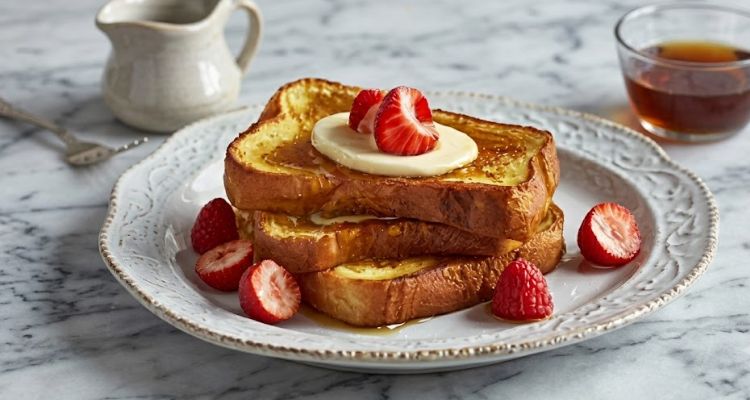
Martha Stewart French toast dips thick brioche slices into an egg custard spiked with Grand Marnier, fresh orange zest, and orange juice before cooking in butter and oil. And the recipe makes 12 slices at around 335 calories each in about 30 minutes, since the custard comes together in one dish and the bread cooks in quick batches.
Where most French toast recipes stop at eggs and milk, Martha Stewart adds orange liqueur, fresh zest, and juice to the custard. That citrus layer cuts through the richness of the brioche and egg, which keeps each slice from tasting flat and heavy the way plain French toast often does.
Dipping the bread right before it goes into the pan is the step that saves or ruins each slice, because brioche is tender and falls apart if it sits in the custard too long. A quick coat on both sides is all it needs, so the interior stays soft while the outside crisps in the hot fat.
Source: Everyday Food (Martha Stewart)
Martha Stewart French Toast
Course: DessertsCuisine: AmericanDifficulty: Easy12
servings10
minutes20
minutes335
kcalEggs beat with Grand Marnier, orange zest, orange juice, sanding sugar, salt, and milk to form a citrus-spiked custard. Then half-inch brioche slices dip in one at a time and cook in batches in a hot skillet with sunflower oil and butter. And each batch takes about 5 minutes, so 12 golden slices are ready before the coffee gets cold.
Ingredients
- For the custard:
6 large eggs
2 1/2 Tbsp orange-flavored liqueur (such as Grand Marnier)
1 Tbsp sanding sugar, plus more for serving
Coarse salt
1 1/2 tsp finely grated orange zest
2 Tbsp fresh orange juice
1 1/4 cups whole milk
- For cooking:
6 Tbsp sunflower oil, divided
3 Tbsp unsalted butter, divided
- For the bread and serving:
1 loaf brioche (20 oz), cut into 1/2-inch slices
Unsalted butter, for serving
Sanding sugar or pure maple syrup, for serving
Directions
- Mix the custard: In a large shallow dish, beat the eggs with a fork, then beat in the Grand Marnier, sanding sugar, a large pinch of salt, orange zest, and orange juice.
- Add the milk: Pour in the milk and beat until the custard is fully combined, since any unmixed pockets of egg cook unevenly on the bread.
- Heat the first batch of fat: In a large heavy skillet, heat 4 tablespoons of oil and 2 tablespoons of butter over medium-high until sizzling.
- Dip and cook: Gently dip one brioche slice at a time into the custard to coat both sides, then lay it in the skillet without crowding the pan.
- Cook until golden: Let each batch cook about 5 minutes total, flipping once, until both sides turn golden brown.
- Drain and hold: Transfer the finished slices to a paper towel-lined wire rack, since the rack keeps the bottom from steaming and going soft.
- Repeat in batches: Continue dipping and cooking the remaining slices, adding the rest of the oil and butter as needed between batches.
- Watch the heat: Reduce the temperature if the pan starts overbrowning, and wipe it out with a damp paper towel before adding fresh fat if needed.
- Serve: Plate the French toast with butter and sanding sugar, or drizzle with maple syrup.
FAQs
Can I use a different bread if I don’t have brioche?
Challah is the closest substitute, since it has a similar egg-rich crumb that soaks up the custard without falling apart. Thick-cut white bread or French bread also work, though neither has the buttery flavor that makes brioche the best match.
Cut whatever bread you use to 1/2-inch slices, because thinner slices get soggy and thicker ones don’t cook through before the outside burns. Day-old bread actually works better than fresh, since slightly stale bread absorbs the custard more evenly without disintegrating.
What can I use instead of Grand Marnier?
Cointreau or triple sec are the closest swaps, because both are orange liqueurs with similar sweetness and citrus intensity. Use the same 2 1/2 tablespoon amount, since the alcohol concentration is comparable.
For a non-alcoholic version, increase the orange juice to 1/4 cup total and add 1/2 teaspoon of pure vanilla extract to compensate for the depth the liqueur brings. The citrus flavor stays, though you lose the warm, boozy note that makes this version distinctly Martha’s.
Why does the recipe use both oil and butter?
Sunflower oil has a higher smoke point than butter, so it keeps the pan from burning during the 5-minute cook time per batch. The butter adds flavor that oil alone cannot, so the combination gives you both a golden crust and a rich, buttery taste.
Cooking in all butter would burn before the brioche cooks through, and all oil would produce a flat-tasting slice. Martha splits the fat across batches, adding fresh oil and butter between rounds, so each batch gets the same sizzle and flavor as the first.
What is sanding sugar, and do I need it?
Sanding sugar is a coarse decorating sugar with large crystals that don’t dissolve quickly in heat, so it stays crunchy on top of the finished French toast. Regular granulated sugar melts into the surface and disappears, which means you lose that textural contrast.
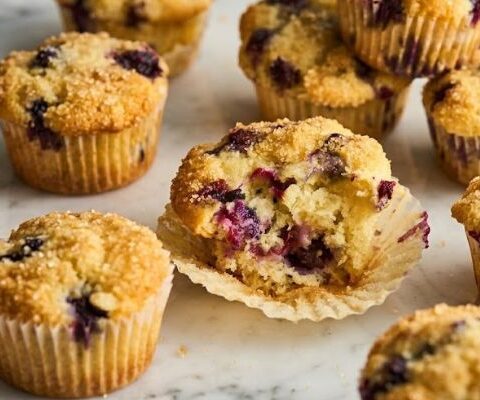
You can find it in the baking aisle near the sprinkles and decorating supplies. If you can’t find it, turbinado sugar has a similar coarse crystal that holds its crunch. Maple syrup is always an option instead, since Martha suggests either topping. For another Martha Stewart breakfast worth making for a crowd, try her Martha Stewart blueberry muffins.
Can I keep these warm while I cook all the batches?
Set your oven to 200°F and place the wire rack on a baking sheet inside, since each finished batch stays warm and crisp while the next one cooks. The wire rack is key, because a flat surface traps steam and makes the bottom soggy.
Don’t stack the slices on top of each other, since the weight compresses the bread and the trapped moisture softens the crust. Spread them in a single layer and they hold for up to 20 minutes, which is enough time to cook all 12 slices. And for another Martha Stewart recipe that works well for entertaining a crowd, her Martha Stewart roast chicken pairs with this French toast on a brunch-to-dinner menu.