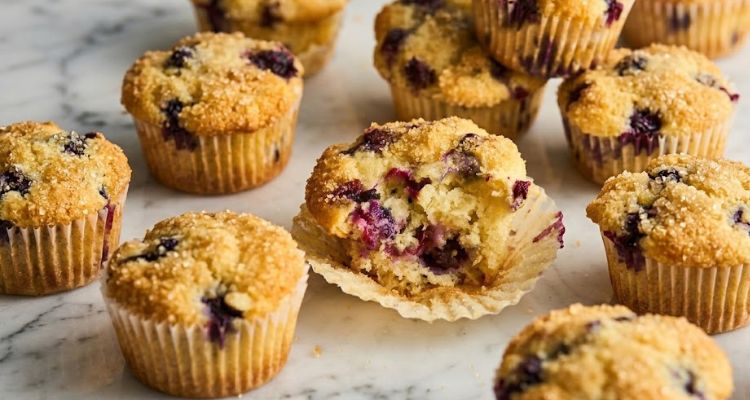
Martha Stewart blueberry muffins cream butter with sugar before folding in 1 3/4 cups of blueberries and baking under a generous sprinkle of crunchy sugar. And the recipe makes 6 large or 12 small muffins at around 570 or 285 calories each in about an hour, since the batter comes together in one bowl.
Where most muffin recipes use melted butter or oil for speed, Martha Stewart creams softened butter with sugar the way you would for a cake. That extra step traps air into the batter, which is what gives these muffins a lighter, fluffier crumb than the dense, greasy texture of a quick-stir version.
Folding the blueberries in by hand at the very end is the step that keeps them whole, because the mixer would crush them and streak purple through the batter. Gentle turns with a spatula distribute the berries evenly, so every muffin gets a full share without bleeding color into the crumb.
Source: Martha Stewart website
Martha Stewart Blueberry Muffins
Course: DessertsCuisine: AmericanDifficulty: Easy12
servings15
minutes45
minutes570
kcalButter creams with sugar until fluffy, then egg, yolks, vanilla, flour, and milk alternate in to build a thick batter. And 1 3/4 cups of blueberries fold in by hand so they stay whole inside. A generous sugar sprinkle on top before baking creates the crunchy crust that cracks open as the muffins rise.
Ingredients
- For the batter:
6 Tbsp unsalted butter, room temperature, plus more for the tins
3 cups plus 2 Tbsp all-purpose flour
3 tsp baking powder
1 tsp salt
1 1/4 cups sugar, plus more for sprinkling
1 large egg
2 large egg yolks
1 tsp pure vanilla extract
1 cup milk
1 3/4 cups blueberries
Directions
- Preheat and prep: Set the oven to 375°F, then butter the muffin tins so the batter doesn’t stick after baking.
- Sift the dry ingredients: In a large bowl, sift together the flour, baking powder, and salt, since sifting removes lumps and aerates the flour for a lighter crumb.
- Cream the butter and sugar: In a stand mixer with the paddle attachment, beat the butter and sugar on medium speed for about 3 minutes until fluffy and light in color.
- Add the eggs: Then beat in the whole egg, the two yolks, and vanilla until well combined, scraping down the sides as needed.
- Alternate flour and milk: Reduce the speed to low, then add the flour mixture and milk in alternating batches, starting and ending with flour so the batter stays stable.
- Fold in the blueberries: Remove the bowl from the mixer, then gently fold in the berries by hand with a spatula so they stay whole instead of bursting.
- Fill and sugar the tops: Divide the batter evenly among the muffin cups, then sprinkle the tops generously with sugar, because that coating bakes into the signature crunchy crust.
- Bake until golden: Cook about 45 minutes for large muffins or 30 minutes for small, until the tops turn light golden and a toothpick comes out clean.
- Cool and unmold: Let the muffins rest in the pan for 15 minutes, then transfer to a wire rack to cool completely before serving.
FAQs
Why does the recipe use one whole egg plus two extra yolks?
The whole egg provides structure from its white, while the two extra yolks add fat and richness without the extra protein that tightens and dries baked goods. That yolk-heavy ratio is what makes the crumb moist and tender rather than rubbery.
Most muffin recipes use whole eggs only, so this unusual split is one of the details that pushes these into bakery territory. The extra fat from the yolks also helps the muffins stay soft for longer after baking, because fat slows staling.
How do I keep the blueberries from sinking to the bottom?
Tossing the berries in a tablespoon of flour from the measured amount before folding them in coats their surface, which helps them grip the batter as it rises. Fresh berries hold their position better than frozen, since frozen berries release water that weighs them down.
If you use frozen blueberries, don’t thaw them first, because the ice keeps them firm enough to stay suspended. Fold them in quickly and get the batter into the oven fast, so they don’t sit and bleed.
Can I use a different berry or fruit?
Raspberries, blackberries, or diced strawberries all work at the same 1 3/4 cup measurement, since the batter ratio stays the same regardless of berry type. Raspberries are the most delicate, so fold even more gently to keep them from collapsing.
Frozen mixed berries work well too, though the colors bleed more than a single variety. Chopped stone fruit like peaches or plums needs draining first, because their juice is heavier than berry juice and can make the bottom of the muffin soggy.
What makes the sugar topping crunchy instead of just sweet?
The generous sprinkle of granulated sugar before baking sits on top of the batter where it is exposed to direct oven heat. That heat melts the crystals into a thin shell, which cracks open as the muffin rises and creates the signature bakery-style top.
A light sprinkle disappears into the batter, so be generous and cover the entire surface. Coarse sugar or turbinado sugar gives an even crunchier result, because the larger crystals resist melting and stay intact during the bake. For another Martha Stewart baking recipe with a standout topping, try her Martha Stewart blueberry crisp.
How should I store these muffins?
They keep at room temperature in an airtight container for 2 to 3 days, and the sugar crust stays crunchy for the first day before softening slightly. Reheating in a 300°F oven for 5 minutes brings back some of the crisp if they’ve been stored overnight.
Freezing works for up to 2 months if you wrap each muffin individually in plastic, then seal in a freezer bag. Thaw at room temperature or microwave for 30 seconds, since the oven thaw takes longer but preserves the texture better. And for another Martha Stewart breakfast worth baking in bulk and freezing, her Martha Stewart banana bread stores and slices the same way.