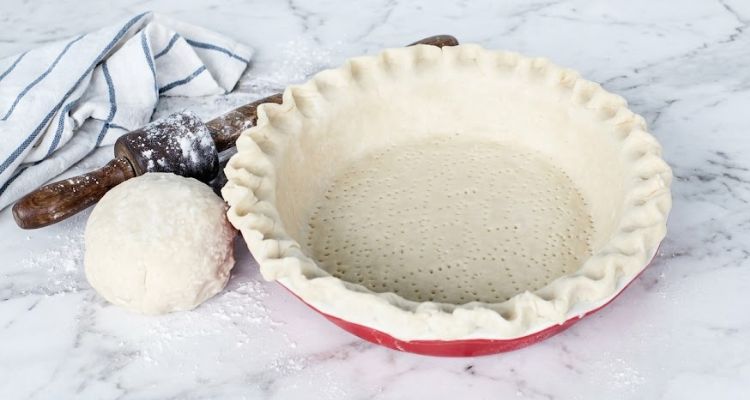
Martha Stewart pie dough pulses cold butter into flour with ice water in a food processor, then chills as two disks for at least an hour. And the recipe makes 2 disks at around 230 calories per hand pie crust, since just 5 ingredients go into the entire batch.
Most pie dough recipes call for cutting the butter in by hand with a pastry cutter or two forks, but Martha Stewart uses the food processor instead. That machine method is faster, and the short pulses keep the butter in pea-sized pieces, which is what creates flaky layers when the dough bakes.
The one thing you cannot rush is the chill time, because warm dough tears when you roll it and shrinks when it bakes. Give the disks a full hour in the fridge, so the gluten relaxes and the butter firms back up after processing.
Source: Martha Stewart website, verified from marthastewart.com
Martha Stewart Pie Dough
Course: SidesCuisine: AmericanDifficulty: Easy12
servings10
minutes230
kcalFive ingredients pulse together in a food processor until the mixture looks like coarse meal with pea-sized butter chunks throughout. Then ice water brings it together into a crumbly dough that holds when squeezed. And after splitting into two disks and wrapping in plastic, the dough chills for at least an hour before rolling.
Ingredients
2 1/2 cups all-purpose flour
1 tsp sugar
1/2 tsp fine salt
2 sticks cold unsalted butter, cut into pieces
1/4 cup ice water (plus up to 2 Tbsp more if needed)
Directions
- Pulse the dry ingredients: Add the flour, sugar, and salt to a food processor, then pulse a few times so they combine evenly.
- Cut in the butter: Drop in the cold butter pieces, then pulse until the mixture looks like coarse meal with a few pea-sized chunks remaining.
- Add the ice water: Pour in the 1/4 cup of ice water, then pulse just until the dough is crumbly but holds together when you squeeze a handful.
- Check the texture: If the dough still falls apart, add up to 2 more tablespoons of water, since humidity and flour brands change how much liquid you need.
- Divide into disks: Turn the dough onto a clean surface, then split it into two equal portions and press each into a flat disk.
- Wrap and chill: Wrap each disk tightly in plastic wrap, then refrigerate for at least 1 hour or up to 2 days before rolling.
FAQs
Why does the butter need to be ice cold?
Cold butter stays in solid pieces as it pulses through the flour, and those chunks are what melt during baking to create steam pockets between the layers. Soft or room-temperature butter blends into the flour instead of staying separate, so the baked crust comes out dense and cracker-like instead of flaky.
Cut the butter into pieces straight from the fridge and work quickly once it hits the processor. If your kitchen runs warm, put the cut butter back in the freezer for 10 minutes before pulsing, because even a few degrees of warmth changes how it behaves.
How do I know when I’ve pulsed enough?
Stop when you see a mix of fine crumbs and pea-sized butter chunks, since both textures are doing different jobs in the final crust. The fine crumbs give the dough structure, while the larger pieces create those flaky pockets.
Over-pulsing is the most common mistake, because the food processor works fast and 2 extra pulses can turn the mixture into a paste. Count your pulses if it helps, and check the texture every 3 to 4 pulses so you don’t go past the right point.
Can I make this dough by hand without a food processor?
A pastry cutter or two forks work to cut the butter into the flour the traditional way, though it takes longer and requires cold hands. Toss the flour mixture and butter pieces together first, then press and cut until the texture matches coarse meal.
The ice water step stays the same, but mix it in with a fork instead of pulsing, since stirring by hand gives you more control over when to stop. The dough is ready when it clumps in your fist without crumbling apart.
Can I freeze the dough for longer storage?
The disks freeze well for up to 2 months if you wrap them in plastic and then seal inside a freezer bag. Thaw overnight in the fridge before rolling, since going straight from the freezer to the counter creates condensation that makes the surface sticky.
Frozen dough that thaws too quickly on the outside while the center stays hard cracks when you roll it. Give it a full overnight thaw, then let it sit on the counter for 10 minutes so it’s cold but pliable enough to roll without splitting. And for another Martha Stewart baking staple worth keeping on hand, try her Martha Stewart banana bread.
What recipes work with this dough besides hand pies?
Martha Stewart designed this for hand pies, and the two disks give you enough dough for about 12 hand pie shells at 4 to 5 inches each. The dough also works for a standard 9-inch double-crust pie, since the yield matches that size.
Galettes, turnovers, and pot pie tops all work, because the butter-heavy ratio bakes up flaky no matter the shape. And for a Martha Stewart dessert that pairs well with homemade crust, her Martha Stewart blueberry crisp uses the same seasonal fruit approach.