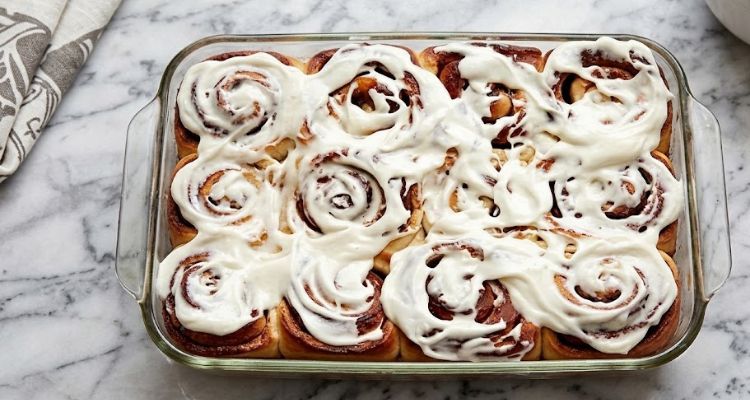
Martha Stewart cinnamon rolls fold mashed potato into an enriched bread dough, proof overnight in the fridge, then bake and glaze with cream cheese frosting. And the recipe makes 12 rolls at around 410 calories each in about 13 and a half hours total, since the overnight rest does most of the work while you sleep.
Where most cinnamon roll recipes build their dough from just flour, butter, and milk, Martha Stewart adds mashed russet potato to the mix. That starch absorbs moisture and disrupts gluten formation at the same time, which gives the finished rolls a tender, pillowy texture that a standard enriched dough cannot match.
Rushing the overnight proof collapses the entire point of this recipe, because the long, cold fermentation is what develops both flavor and that extra-soft crumb. Give the rolls a full 8 hours in the fridge, so the yeast works slowly and the dough relaxes completely before its final rise the next morning.
Source: Martha Stewart Living (December 2018)
Martha Stewart Cinnamon Rolls
Course: DessertsCuisine: AmericanDifficulty: Easy12
servings50
minutes30
minutes410
kcalMashed potato, melted butter, milk, and egg mix into a bread flour dough that rises for over an hour before rolling out with a cinnamon brown sugar filling. Then the log slices into 12 rounds that proof overnight in the fridge. And a 30-minute bake at 350°F followed by a tangy cream cheese glaze finishes them off.
Ingredients
- For the dough:
6 Tbsp unsalted butter, melted, plus more room-temperature for bowl and dish
1 medium russet potato (8 oz), peeled and cut into 1-inch pieces
1 cup whole milk
2 1/4 tsp active dry yeast (one 1/4-oz envelope)
2/3 cup granulated sugar
1 large egg
3 1/2 cups bread flour, plus more for dusting
1 1/2 tsp kosher salt
- For the filling:
2/3 cup packed light brown sugar
2 tsp ground cinnamon
Large pinch kosher salt
6 Tbsp unsalted butter, room temperature
- For the glaze:
4 oz cream cheese, room temperature
1/2 cup confectioners’ sugar
3 Tbsp whole milk
1/2 tsp pure vanilla extract
Pinch kosher salt
Directions
- Cook and mash the potato: Boil the potato pieces until fork-tender, about 10 to 12 minutes, then drain and mash until smooth to yield 2/3 cup.
- Bloom the yeast: Warm the milk to 110°F, then pour it into the stand mixer bowl, add the yeast, and let it stand about 5 minutes until foamy.
- Mix the dough: Stir in the melted butter, sugar, mashed potato, egg, flour, and salt until a ragged dough forms, since it comes together rough at first.
- Knead with the hook: Attach the dough hook and mix on medium-low for about 15 minutes, scraping the sides a few times, until the dough is soft and pliable.
- First rise: Transfer the dough to a buttered bowl, cover with plastic wrap, then let it rise in a warm spot until almost doubled, about 1 hour and 10 minutes to 1 1/2 hours.
- Make the filling: While the dough rises, stir together the brown sugar, cinnamon, and salt in a bowl and set aside.
- Roll and fill: Punch down the dough, then roll it on a floured surface into a 14×18-inch rectangle and spread the softened butter evenly over it, leaving a 1/2-inch border on the far long edge.
. - Add the sugar mixture: Sprinkle the brown sugar filling over the butter, then roll the dough tightly away from you into a jelly-roll shape.
- Firm the log: Transfer the roll seam-side down to a parchment-lined sheet, then refrigerate about 30 minutes so it firms enough to slice cleanly.
- Cut into rounds: Trim the ends, then cut crosswise into twelve 1 1/2-inch rounds with a serrated knife and arrange cut-side up in a buttered 13×9 dish.
- Overnight proof: Cover with plastic wrap and refrigerate at least 8 hours or overnight, since the slow cold fermentation builds flavor and tenderness.
- Warm rise and bake: The next morning, preheat to 350°F, set the dish in a warm spot for about 1 1/2 hours until the rolls almost double, then bake 30 to 35 minutes until browned and a thermometer reads 210°F inside.
- Glaze and serve: While the rolls cool 10 minutes in the dish, whisk the cream cheese, confectioners’ sugar, milk, vanilla, and salt until smooth, then spread over the warm rolls and rest 15 to 20 minutes more before serving
FAQs
What does the mashed potato actually do in the dough?
Potato starch absorbs and holds onto moisture inside the dough, so the finished rolls stay soft and tender instead of drying out after baking. It also disrupts gluten formation, which means the crumb tears apart in fluffy layers rather than pulling apart in chewy strands.
You need about 2/3 cup of smooth mashed potato from one 8-ounce russet, and it must be lump-free before it goes in. A potato ricer gives the smoothest result, but mashing with a fork works as long as you press out every lump, since chunks create dense pockets in the finished rolls.
Can I use instant yeast instead of active dry?
The recipe specifically calls for active dry yeast and recommends against swapping in instant, because instant works faster and would overproof during the overnight rest. Active dry yeast takes longer to ferment, which matches the 8-hour cold proof perfectly.
If active dry is all you can find, make sure it foams within 5 minutes of hitting the warm milk, since dead yeast produces no rise at all. That foam test is your only insurance before committing to the full overnight timeline.
Why do the rolls proof overnight in the fridge?
Cold fermentation slows the yeast down, which gives the dough time to develop complex flavor that a fast room-temperature rise cannot produce. The cold also relaxes the gluten, so the rolls bake up softer and more tender after their final warm rise the next morning.
That overnight schedule is also the practical advantage, because all the messy work happens the night before and the morning is just a rise and a bake. The rolls can stay in the fridge up to overnight, so you choose when to pull them based on your brunch timeline.
Can I freeze the rolls before baking?
The recipe notes you can freeze the sliced, unbaked rolls in their dish wrapped tightly in plastic for up to 3 months. Thaw them overnight in the fridge, then continue with the warm rise and bake steps the next morning.
Freezing after baking also works for up to 1 month, though the glaze softens after thawing. For best results, freeze without the glaze and make it fresh when you reheat. For another Martha Stewart make-ahead breakfast that freezes well, try her Martha Stewart banana bread.
How should I store leftover rolls?
They are best the day they are baked, but leftovers keep at room temperature in an airtight container for up to 2 days, or in the fridge for up to 4 days. The cream cheese glaze means they should not sit out longer than that, since dairy-based toppings spoil at room temperature.
Reheat in a 300°F oven for 5 to 8 minutes to warm them through without drying the edges. The microwave works for a quick fix, though the texture softens more than the oven method. And for another Martha Stewart recipe that rewards slow, patient baking, her Martha Stewart meatloaf uses the same next-day-is-better philosophy.